Examining Taser Effectiveness: Why Body Composition and Other Factors Can Impede Their Function
A recent incident in Times Square highlights critical questions about the reliability of Tasers and how factors like body fat and probe placement can impact their ability to incapacitate individuals.
Health·
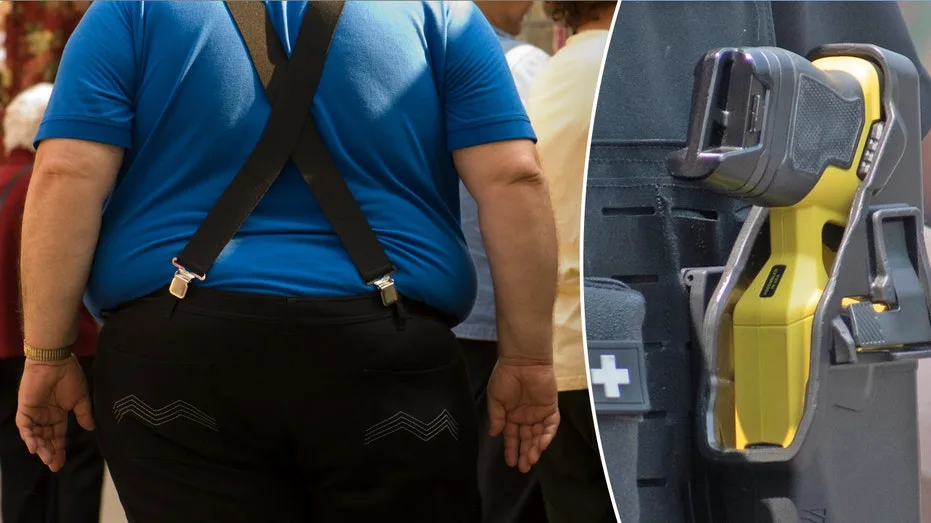
A recent confrontation in Times Square, where law enforcement deployed Tasers multiple times without successfully subduing a suspect, has brought renewed attention to the limitations of these devices. The incident, involving 49-year-old Pamela Cisneros, occurred after she allegedly stabbed two individuals, resulting in the death of a 32-year-old woman and injuries to a 68-year-old man.
New York City Police Commissioner Jessica Tisch addressed the situation at a news conference, stating, "As multiple officers discharged Tasers, which proved to be ineffective, the subject continued to advance toward our officers with the knives." Cisneros reportedly declared, "I’m not dropping anything. I would rather kill both of you," before two officers discharged their firearms, striking her. Cisneros was transported to Bellevue Hospital, where she was pronounced deceased.
This event has ignited a broader discussion regarding the factors that can diminish a Taser's effectiveness, particularly the potential influence of an individual's body composition, such as obesity.
How Taser Technology Works
Tasers are designed to deliver an electrical charge that induces neuromuscular incapacitation (NMI), leading to involuntary muscle contractions. According to Axon, the manufacturer, a standard Taser projects two small, barbed probes connected to the device by insulated wires. These electrical pulses travel along the wires into the body.
Axon’s website explains that for NMI to occur, "it is best that two probes make contact 12 inches (30 cm) or more apart."
Key Factors in Taser Failure
Steve Keller, a retired police sergeant from Blue Ash, Ohio, identifies several common reasons why Tasers may not achieve their intended effect. These include:
- Thick or bulky clothing worn by the individual
- Suboptimal placement of the probes on the body
- Substance abuse by the person being tased, which can alter their physiological response
- Issues with the electrical connectivity between the two probes
Keller emphasized that an individual's body composition, specifically a significant layer of body fat, can also compromise the device's efficacy by interfering with the necessary electrical connection.
Police officers receive training to target large muscle groups, such as the back and thighs, to maximize Taser effectiveness. They are also instructed to adjust their aim based on factors like the subject's clothing and the distance between them and the individual.
The Role of Body Composition
The presence of a substantial fat layer can pose a challenge to Taser functionality. Keller explained that if one probe makes contact with the abdomen of an obese person, it could negatively affect the overall connectivity required between the two probes for the Taser to work properly. "If one probe hits the person and the other probe misses, the Taser will not work," he noted.
He offered an example: if one probe hits a person's thigh but the other strikes a thick winter jacket, the electrical connection might be insufficient. "The same could be considered if there is a large layer of body fat — they could still feel it, but it might not be as effective."
Keller elaborated on the physiological reason behind this: "Tasers are much more effective for muscle than fat because muscle conducts electricity much better, and the Taser delivers a high voltage. In an obese person, it is more difficult to find an area that conducts electricity."
Mental Health Considerations
Beyond physical factors, mental health can also significantly influence an individual's response to a Taser, as highlighted by Keller in relation to the Times Square incident. Commissioner Tisch confirmed during her press conference that the suspect, Pamela Cisneros, had a documented history of mental health interactions with the New York City Police Department, with previous incidents recorded in 2018 and 2019.
Conclusion
The effectiveness of Tasers is a complex issue influenced by a range of variables, from the technical aspects of probe placement and connectivity to individual physiological and psychological states. Understanding these factors is crucial for evaluating and optimizing the use of these devices in law enforcement situations.
Related Stories

New Study Suggests High Daily Coffee Consumption May Affect Bone Density in Older Women
New research from Flinders University suggests that consuming five or more cups of coffee daily could be linked to lower bone mineral density in postmenopausal women. Conversely, tea consumption was associated with
Sep 5
Cannabis Edibles Pose Hidden Driving Risk Despite Low Blood THC Levels, Study Suggests
New research reveals that driving under the influence of cannabis edibles can substantially hinder road performance and slow reaction times. This impairment occurs even when blood THC levels remain below typical legal
Sep 3

Louisiana Girl Dies After Suspected Brain-Eating Amoeba Infection Linked to Lake Swim
An 8-year-old Louisiana girl passed away from a suspected Naegleria fowleri infection, a brain-eating amoeba, following a swim in Lake Claiborne. Her family confirmed the tragic loss, which occurred just one day after
Aug 24

Erectile Dysfunction Medication Tadalafil Associated with Increased Glaucoma Risk, Study Suggests
A recent study found that men using tadalafil for erectile dysfunction or enlarged prostate symptoms were significantly more likely to develop glaucoma. Researchers advise regular eye monitoring for long-term users,
Aug 23