Actor Ryan Reynolds recently stirred public debate after describing the 1980s as a "brutal" and "f---ing mess" during the New York premiere of his Cold War-era film, 'Mayday.' His characterization of the decade, particularly given the nostalgia-driven theme of his new movie, drew swift criticism from various quarters.
During an interview, Reynolds stated, "When you get far enough away from a time period that’s quite distinct, there’s always a lovely feeling associated with it, almost like you pave over all the trauma with puppy dogs and ice cream. The '80s was a brutal, brutal time for people. It was a f---ing mess, and people forget that."
Spencer Pratt Defends the Decade's Cultural Values
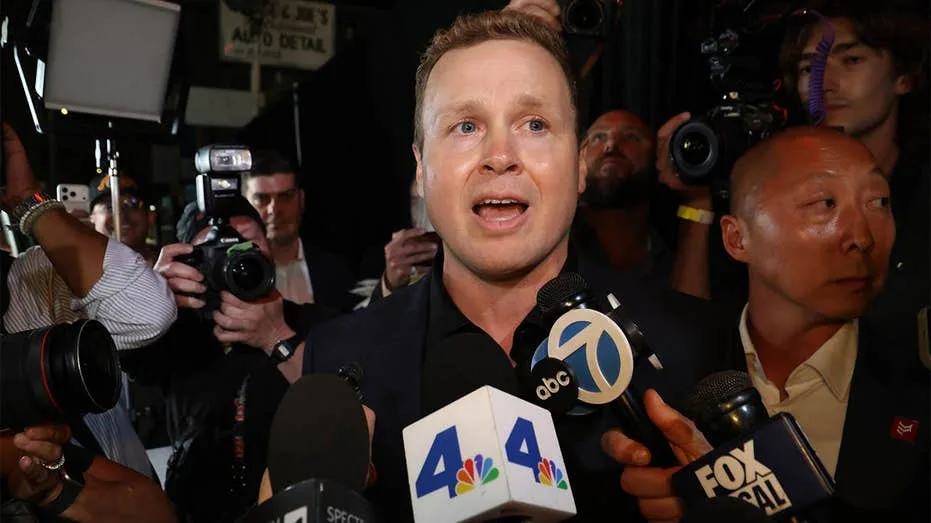
Responding to Reynolds' comments, Spencer Pratt, a former reality television figure and California politician, countered that the 1980s represented a period of greater cultural stability compared to contemporary society, marked by more distinct notions of good and evil.
Pratt articulated his viewpoint on social media, suggesting, "It makes perfect sense that Ryan Reynolds' view of the 80s is the inverse of what normal people think. In 80s movies, bad guys were villains. Today, the bad guys are the heroes. Hollywood now bends over backwards to redeem wickedness and mental illness."
He continued by contrasting cinematic eras: "'Top Gun' and St Thomas of Cruise represent the hero generation of cinema. Reynolds represents the anti-hero generation, and they are both byproducts of their own creations. Choose your path carefully, young man."
Reynolds is widely recognized for his role as Deadpool, a Marvel character known for his cynical humor and meta-commentary, often presented as an anti-hero who breaks the fourth wall, diverging significantly from traditional superhero archetypes.
Pratt further elaborated on his stance by sharing an excerpt from a previous video. In it, he discussed the rise of far-left politics among women, what he termed the "hijacking of the maternal instinct," and the erosion of classic heroic figures as American culture increasingly embraces empathy for anti-heroes or outright villains.
He observed, "Spencer Pratt's hot take suggests a sobering reality. Has pop culture's infatuation with anti-heroes had real-world implications? It's one thing to follow Tony Soprano or Walter White, but modern films and TV shows are replete with villains we're asked to cheer on."
Pratt highlighted several examples: "Consider how many recent movies have given us hit men with hearts of gold. ‘Bullet Train.’ ‘Hit Man.’ The ‘John Wick’ saga. Indie films like ‘Emily the Criminal’ and ‘Carolina Caroline’ also turn villains into quasi-heroes."
He posed a critical question: "Has that had a corrosive effect on the culture? Pratt's question is worth exploring."
Concluding his thoughts, Pratt acknowledged, "His takedown of Reynolds' comments also leave[s] a mark. No decade is perfect. The '80s gave us the AIDS crisis, worries about nuclear war, the Challenger explosion and more. It also delivered great pop culture classics and lacked the cultural hand-wringing that weighs down so much of our lives today. It was a more simple time, and it's impossible not to miss that."
Political Commentary on Reynolds' Remarks
Adding a political dimension to the discussion, Theo Wold, who previously served as an assistant attorney general and White House deputy assistant for domestic policy under President Donald Trump, offered his critique.
Wold remarked, "Ryan Reynolds forgot to do some thinking before he took a talking point from his celebrity cocktail hours and debuted it in public. Most of us remember the '80s, and it was a time when this country enjoyed greater social cohesion and wider individual freedoms than today, with relative economic prosperity."
He also speculated on Reynolds' background: "Of course, Reynolds’ experience growing up in Canada might have been different — socialism was working just as poorly then as it is now."
Wold further criticized what he perceived as a "vapid Hollywood celebrity" perspective, stating, "Also, only a vapid Hollywood celebrity would cite the 'Cuban Missile Crisis' as an explanation for why the 1980s were supposedly so 'brutal,' rather than, say, the horrific crimes perpetrated by radical leftists like domestic terrorists Angela Davis and Bill Ayers."