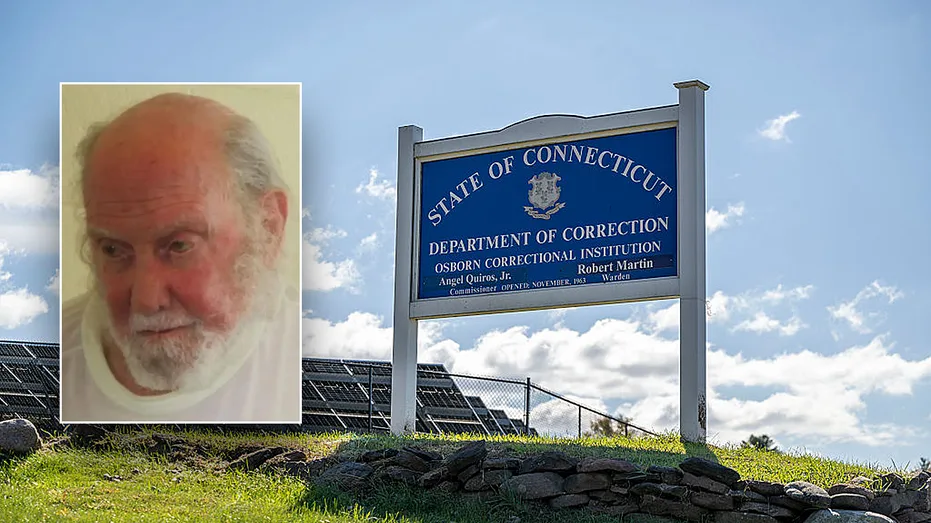
Francis Clifford Smith, widely considered the longest-serving prisoner in American history, passed away in late June at the age of 101. His death occurred peacefully in his sleep at 60 West, a secure Connecticut nursing facility dedicated to the care of older individuals within the justice system. Smith, who was only a few months shy of his 102nd birthday, was cremated following his death, with no funeral services held.
David Skoczulek, a spokesperson for 60 West, stated that Smith "essentially, he died of old age." Skoczulek also noted the minimal family involvement in Smith's passing but assured that the arrangements were "appropriate, met his wishes and was dignified."
Smith was 25 years old when he received his initial death sentence for the fatal shooting of Grover Hart, a 68-year-old night watchman. The incident occurred on July 23, 1949, during an attempted robbery at a Connecticut yacht club. Smith was among two individuals apprehended in connection with Hart's killing. The other man, George Lowden, accepted a plea agreement and initially implicated Smith. However, Lowden subsequently claimed that law enforcement officials had coerced him into making the statement through physical abuse and ultimately declined to testify against Smith during the trial.
Over the course of 76 years, Smith faced the prospect of execution on eight separate occasions, with each scheduled date ultimately resulting in a reprieve. He steadfastly maintained his innocence throughout his incarceration. In a 2023 interview, he told the Boston Globe, "I’m in here on no evidence at all."
Questions Arise About the Evidence
As the years progressed, significant doubts emerged regarding the evidence used to convict Smith. A key witness later recanted their testimony, Lowden retracted his initial statement implicating Smith, and another individual came forward claiming responsibility for Hart's murder. These developments fueled repeated attempts to halt Smith's scheduled executions and secure a new trial.
Major Leo Carroll, one of the officers involved in Smith's interrogation after his arrest, even testified before the Board of Pardons prior to Smith's eighth planned execution. Carroll stated, "I'm not even sure he was present at the murder."
A critical witness later retracted her testimony that had connected Smith to the crime. Concurrently, Lowden disavowed his previous statement that had implicated Smith. Furthermore, another man incarcerated in Alabama subsequently asserted that he, not Smith, was involved in Hart's murder.
Despite these revelations, Smith never received a new trial. A judge reviewing the other man's confession deemed it not credible, and Smith's murder conviction remained unchallenged. His death sentence was eventually commuted to life imprisonment in 1954.
Decades of Imprisonment and Brief Freedoms
Smith spent an extraordinary 76 years incarcerated, punctuated by only three brief periods of freedom. One such instance occurred in 1967 when he escaped, remaining at large for 12 days before his recapture.
In 1975, he was granted parole and remained free for approximately ten months. However, he was then arrested on charges of larceny and weapons offenses, leading to his return to prison for violating the terms of his parole. The Boston Globe reported that he was never ultimately convicted of these subsequent charges.
Prison records suggest that Smith either declined or refused several subsequent opportunities for parole, although he later contested this characterization, stating he could not recall such instances. Nonetheless, in 2020, he consented to supervised parole, which led to his transfer to the nursing facility where he eventually passed away.
Towards the end of his life, Smith was reportedly afflicted with dementia. While the Connecticut Department of Correction has not officially confirmed this diagnosis, they acknowledged that Smith was contending with various health issues typically associated with advanced age. Andrius Banevicius, the public information officer for the Connecticut Department of Correction, remarked on Smith's remarkable lifespan, stating, "He was 101 and a half... He did pretty well as far as longevity is concerned."