College Sports Face Legal Showdown as Major Conferences Challenge Athlete Eligibility Rulings
Top college athletic conferences have implemented new rules prohibiting athletes with professional experience, creating a direct conflict with recent court injunctions.
Sports·
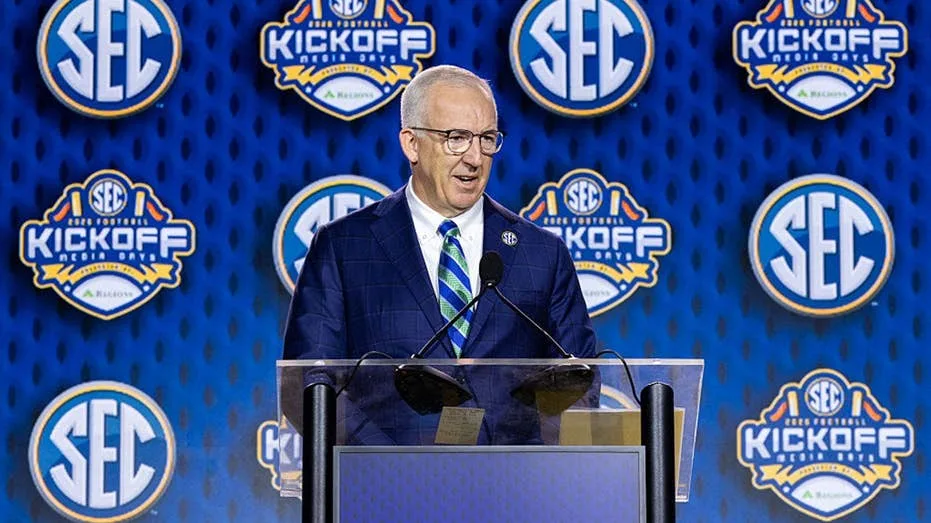
The landscape of college athletics is currently grappling with significant upheaval following new directives issued by the Southeastern Conference (SEC) and Big Ten Conference. These guidelines directly impact the eligibility of athletes who were preparing to join teams this week, particularly those who have been granted permission to play through court injunctions and temporary restraining orders.
Conferences Enforce New Eligibility Rules
Earlier this week, both the SEC and Big Ten — soon to be joined by the Atlantic Coast Conference (ACC) and Big 12 Conference — voted to establish new regulations that would bar athletes with prior professional sports experience from competing at the collegiate level. This collective decision emerged after judicial rulings in multiple states had cleared the way for several players to participate in the upcoming season.
Many of these legal challenges stem from the National Collegiate Athletic Association’s (NCAA) updated eligibility framework, which permits athletes five years to compete in five seasons of college sports. The newly enacted conference policies specifically state that any athlete who has signed a professional contract, declared for the National Football League (NFL) Draft, or taken part in a professional training camp will be ineligible for competition within these conferences.
The SEC's approach to these new guidelines included an evening vote by its presidents and chancellors to determine their implementation regarding ongoing cases involving athletes with professional backgrounds. Furthermore, the SEC has empowered Commissioner Greg Sankey to enforce these regulations, including the authority to suspend coaches and impose financial penalties on institutions found in violation.
The Clash with Court Orders and NCAA Guidelines
This presents a complex scenario for universities bringing athletes onto campus for the upcoming college football or basketball seasons. According to attorney Ryan Downton, who represents several affected players, legal teams are currently formulating a “legal strategy” to address these new guidelines from both the NCAA and the participating conferences. Sources indicated that the SEC's vote was unanimous, yet this does not preclude further legal challenges in the coming days.
“We are still working on a legal strategy,” attorney Ryan Downton noted.
Legal Challenges and Coaching Perspectives
A prominent figure in this evolving situation is Louisiana State University (LSU) coach Lane Kiffin, whose program has recruited players with prior NFL experience. Kiffin recently explained his rationale, suggesting that if his team didn't pursue these athletes, other programs would. He stated on Monday:
“So, you know, we have you know made a decision to recruit some kids around the country, and through these multiple injunctions around the country, which, this is not a first time in college sports, a group of players were granted a fifth year of eligibility, in multiple sports. And through them winning their injunction and entry into the portal, they’re available to recruit. So ourselves, like many places around the country, are recruiting them. At the end of the day, you know, because of these rulings, they’re either going to play for you or they’re going to play somewhere else around the country. So, we made a decision to recruit them, like probably most people are.”
Player Cases Highlight Legal Divide
Among the players impacted are former Ole Miss football standouts Dae'Quan Wright and Zxavian Harris, who are anticipated to join the LSU roster. Their eligibility for an additional season was secured through a ruling from the 19th District Court of Louisiana. Other athletes have similarly won state court cases to return for the current season, such as Texas offensive lineman Cole Hutson, who successfully sued the NCAA in a Texas court for an extra year of eligibility.
Attorney Darren Heitner, representing Dae'Quan Wright, asserted that the SEC should respect the order issued by the Louisiana court.
“He should be rostered by LSU and be a great contributor for the Tigers. The SEC should heed the court order recently issued by a Louisiana judge,” Heitner said.
The crucial question now facing institutions like LSU is whether they will proceed with integrating these athletes, knowing it would contravene newly established conference mandates, yet be legally permissible under existing court injunctions. The coming days are expected to bring further developments in this unfolding scenario.
Related Stories
Michael Penix Jr. Emerges as Frontrunner for Falcons' Starting Quarterback Amid Tua Tagovailoa's Camp Struggles
The Atlanta Falcons' quarterback competition is reportedly tilting in favor of rookie Michael Penix Jr. Sources indicate veteran Tua Tagovailoa's inconsistent play in camp and the preseason game has expedited Penix's
Aug 26
Timberwolves Star LaMelo Ball Enlists Personal Driver After Past Driving Incidents
Minnesota Timberwolves guard LaMelo Ball has reportedly hired a personal driver, according to his brother Lonzo Ball. This decision follows a history of "situations on the road" in Charlotte, aiming to reduce the star's
Aug 26
Aryna Sabalenka's US Open Attire Ignites Fashion Debate, Draws Strong Reactions
Tennis sensation Aryna Sabalenka generated significant discussion with her mesh dress worn during the US Open mixed doubles. Despite criticism labeling her outfit "trashy," Sabalenka stated she loves her unique style,
Aug 26
IndyCar's Freedom 250 Grand Prix in Washington, D.C. Achieves Record Viewership
The NTT IndyCar Series' Freedom 250 Grand Prix in Washington, D.C., attracted 3.282 million viewers, making it the most-watched non-Indy 500 race since 2008. This surge in viewership marks a 279% increase over average
Aug 26